Download PDF The Blood of Emmett Till, by Timothy B Tyson
This publication The Blood Of Emmett Till, By Timothy B Tyson is anticipated to be among the very best seller publication that will certainly make you really feel completely satisfied to purchase as well as read it for finished. As understood can typical, every publication will have particular points that will make an individual interested a lot. Also it comes from the writer, type, content, and even the author. However, many people additionally take guide The Blood Of Emmett Till, By Timothy B Tyson based on the motif and title that make them surprised in. and below, this The Blood Of Emmett Till, By Timothy B Tyson is really recommended for you considering that it has fascinating title as well as style to review.
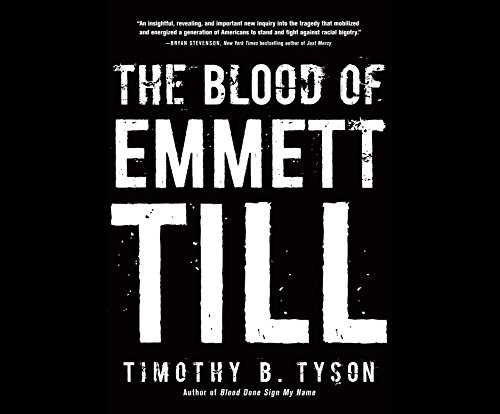
The Blood of Emmett Till, by Timothy B Tyson

Download PDF The Blood of Emmett Till, by Timothy B Tyson
When you are rushed of task deadline as well as have no suggestion to get motivation, The Blood Of Emmett Till, By Timothy B Tyson publication is among your options to take. Book The Blood Of Emmett Till, By Timothy B Tyson will certainly offer you the ideal resource as well as thing to get inspirations. It is not only about the tasks for politic business, administration, economics, and various other. Some ordered tasks to make some fiction your jobs likewise need inspirations to get over the job. As just what you need, this The Blood Of Emmett Till, By Timothy B Tyson will probably be your selection.
Do you ever before recognize the e-book The Blood Of Emmett Till, By Timothy B Tyson Yeah, this is a very interesting e-book to read. As we informed previously, reading is not kind of responsibility activity to do when we need to obligate. Reviewing need to be a practice, a great habit. By checking out The Blood Of Emmett Till, By Timothy B Tyson, you could open the brand-new globe as well as obtain the power from the world. Every little thing can be acquired with guide The Blood Of Emmett Till, By Timothy B Tyson Well in quick, e-book is quite powerful. As what we provide you here, this The Blood Of Emmett Till, By Timothy B Tyson is as one of checking out e-book for you.
By reading this publication The Blood Of Emmett Till, By Timothy B Tyson, you will obtain the most effective point to obtain. The new thing that you do not have to invest over money to reach is by doing it alone. So, just what should you do now? Check out the link page as well as download and install the book The Blood Of Emmett Till, By Timothy B Tyson You could obtain this The Blood Of Emmett Till, By Timothy B Tyson by on-line. It's so very easy, right? Nowadays, innovation truly sustains you activities, this online publication The Blood Of Emmett Till, By Timothy B Tyson, is too.
Be the first to download this publication The Blood Of Emmett Till, By Timothy B Tyson and let reviewed by coating. It is quite easy to review this e-book The Blood Of Emmett Till, By Timothy B Tyson considering that you do not have to bring this printed The Blood Of Emmett Till, By Timothy B Tyson all over. Your soft file e-book can be in our kitchen appliance or computer system so you could appreciate checking out all over and also whenever if required. This is why whole lots varieties of people likewise check out guides The Blood Of Emmett Till, By Timothy B Tyson in soft fie by downloading the publication. So, be one of them who take all benefits of checking out the book The Blood Of Emmett Till, By Timothy B Tyson by on the internet or on your soft file system.
A New York Times Bestseller An Award-winning Author In a time when discussions of race are once again coming to the fore, the event that launched the civil rights movement ― the 1955 lynching of a fourteen-year-old black boy named Emmett Till ― is now reexamined by an award-winning author with access to never-before-heard accounts from those involved as well as recently recovered court transcripts from the trial.
- Sales Rank: #896741 in Books
- Published on: 2017-02-07
- Original language: English
- Dimensions: 4.88" h x .39" w x 5.59" l,
- Binding: MP3 CD
Review
“An insightful, revealing and important new inquiry into the tragedy that mobilized and energized a generation of Americans to stand and fight against racial bigotry.”
(Bryan Stevenson, New York Times bestselling author of Just Mercy)
“A jolting and powerful book.... Swift-flying and meticulously researched.” (The Washington Post)
“The Blood of Emmett Till unfolds like a movie, moving from scene to reconstructed scene, panning out to help the reader understand the racism and bigotry that crafted the citadel of white supremacy and focusing in on intimate exchanges imbued with meaning....” (The Atlanta Journal-Constitution)
“What sets Tyson's book apart is the wide-angle lens he uses to examine the lynching, and the ugly parallels between past and present… A terrific writer and storyteller, Tyson compels a closer look at a heinous crime and the consequential decisions, large and small, that made it a national issue.” (Minneapolis Star Tribune)
“Tim Tyson’s profound eloquence and groundbreaking evidence capture the cries of Emmett Till and the rise of a movement, and will call us to the cause of justice today.” (Rev. Dr. William J. Barber, II, president of the North Carolina NAACP and author of The Third Reconstruction: Moral Mondays, Fusion Politics, and the Rise of a New Social Justice Movement)
“A critical book... [that] manages to turn the past into prophecy and demands that we do the one vital thing we aren’t often enough asked to do with history: learn from it.” (The Atlantic)
“An account of absorbing and sometimes horrific detail. Comprehensive in scope....” (The New York Times)
“Eloquent and outraged.... A stunning success essential for our times.”
(Nell Irvin Painter, author of The History of White People)
“From one of our finest civil rights historians comes this harrowing, brilliant, and crucial book. The full story of Emmett Till has never before been told. It will terrify you; it should. It will inspire you; it must.”
(Jeff Sharlet, New York Times bestselling author of The Family)
“Astonishingly relevant.... At once thrilling and agonizing.” (Jezebel)
“I couldn’t stop reading Timothy Tyson’s The Blood of Emmett Till. It is civil rights history that captivates the reader like a mystery novel....” (Patricia Bell-Scott, author of The Firebrand and the First Lady)
“Tyson’s powerful narrative sheds new light on the circumstances that led to the murder, makes the case that its influence stretches from the Montgomery bus boycott to the angry protests in Ferguson, Missouri – and argues that the country hasn’t yet come to grips with the roots of any of the above.” (Raleigh News & Observer)
“Tim Tyson has universalized the Emmett Till story to make it an American tragedy. His bracing, granular narrative provides fresh insight into the way race has informed and deformed our democratic institutions.” (Diane McWhorter, Pulitzer Prize-winning author of Carry Me Home)
“Emotional and electric.” (Toronto Star)
“More than simply a retelling of the story of Till’s death and the subsequent trial, the book incorporates new sources into the narrative… In the course of telling this story, Tyson explores larger, more important lessons about America’s long, bitter struggle with race.” (Greensboro News & Record)
“Groundbreaking new evidence and Tyson’s masterful prose make The Blood of Emmett Till a devastating indictment of America, both past and present.”
(Danielle McGuire, author of At the Dark End of the Street)
“A scathing re-examination.... [Tyson] makes it all new and relevant.” (Winston-Salem Journal)
“The Blood of Emmett Till is less concerned with the historical cowardice of Bryant and the white men who effectively lynched Till, and much more invested in the bravery of Emmett Till’s mother, Mamie, and of the courage of the black activists who worked for voting rights and justice amidst the violent horror of life in Mississippi....” (Yes! Weekly)
“Tyson gives us a history that challenges everything we thought we knew about Emmett Till.”
(Crystal Feimster, author of Southern Horrors)
“Tyson’s meticulous and absorbing retelling of the events leading up to the horrific lynching in 1955 includes an admission from Till’s accuser that some of her testimony was false.” (New York Times Book Review)
“Tyson’s remarkable achievement is that each thread is explored in detail, backstories as well as main events, while he maintains a page-turning readability for what might seem a familiar tale. Cinematically engaging, harrowing, and poignant, Tyson’s monumental work illuminates Emmett Till’s murder and serves as a powerful reminder that certain stories in history merit frequent retelling.” (Publishers Weekly (starred review))
“In many ways, Timothy Tyson is the ideal author to explore new details surrounding the lynching death of Emmett Till....” (Winston-Salem Chronicle)
“Neither lurid tale nor political iconography.... Tyson is best with intimacies, when he writes about local people and their relationship to one another and to place. He takes special care with mise en scene, providing a rich portrait of the world of Emmett Till.” (Chapter 16)
“Apply[s] diligent research, scrupulous perspective and a vigorous aptitude for weaving pertinent public and intimate details.” (USA Today)
“Skillfully tells the story of the gruesome murder and its still-resonant aftermath.” (Tampa Bay Times)
“Ripe for optioning.” (Hollywood Reporter)
“Rip-roaring.... Tyson has produced a brief, sharp re-evaluation of the case, reminding us that a murder 61 years ago still has resonance.” (Star News)
“This highly readable book is likely to remain the final account of the Till murder and trial and its impact in the United States and abroad. It will appeal to anyone interested in African American history and the judicial process.” (Library Journal)
“Till’s memory burns brighter with each passing year and remains a touchstone for understanding white violence against black men today.” (William Ferris, co-editor of The Encyclopedia of Southern Culture)
“Bolstered by prodigious research... the well-presented details... add atmosphere. In addition, Tyson is masterful at explaining how the Till murder became a major cause of the civil rights movement. Especially resonant today is the author's focus on obtaining voting rights for blacks in Southern states that denied those rights before the Till murder.... Tyson skillfully demonstrates how, in our allegedly post-racial country, a "national racial caste system" remains in place.” (Kirkus Reviews)
“Clear, concise and well-documented.” (Florida Times-Union)
“A riveting, richly detailed account of the crime that ignited the civil rights movement.” (Bookpage)
“Compelling.... With Tyson’s new book, and Carolyn Bryant Donham’s remarks, we have reason to revisit a period in our history when bigotry, blood, and sacrifice became a call to action. “ (Vanity Fair)
“Drawing on Bryant’s only interview, Tyson reexamines the crime that launched the civil rights movement.” (AARP)
“Tyson does an admirable job of condensing and updating information about the case, using a 2006 FBI report on Till’s murder to weave together a historical tapestry.” (Austin American-Statesman)
About the Author
Timothy B. Tyson is Senior Research Scholar at the Center for Documentary Studies at Duke University, Visiting Professor of American Christianity and Southern Culture at Duke Divinity School, and adjunct professor of American Studies at the University of North Carolina. He is the author of Blood Done Sign My Name, a finalist for the National Book Critics Circle Award, and winner of the Southern Book Award for Nonfiction and the Grawemeyer Award in Religion, and Radio Free Dixie: Robert F. Williams and the Roots of Black Power, winner of the James Rawley Prize for best book on race and the Frederick Jackson Turner Prize for best first book in US History from the Organization of American Historians. He serves on the executive board of the North Carolina NAACP and the UNC Center for Civil Rights.
Excerpt. © Reprinted by permission. All rights reserved.
The Blood of Emmett Till 1 NOTHING THAT BOY DID
The older woman sipped her coffee. “I have thought and thought about everything about Emmett Till, the killing and the trial, telling who did what to who,” she said.1 Back when she was twenty-one and her name was Carolyn Bryant, the French newspaper Aurore dubbed the dark-haired young woman from the Mississippi Delta “a crossroads Marilyn Monroe.”2 News reporters from Detroit to Dakar never failed to sprinkle their stories about l’affaire Till with words like “comely” and “fetching” to describe her. William Bradford Huie, the Southern journalist and dealer in tales of the Till lynching, called her “one of the prettiest black-haired Irish women I ever saw in my life.”3 Almost eighty and still handsome, her hair now silver, the former Mrs. Roy Bryant served me a slice of pound cake, hesitated a little, and then murmured, seeming to speak to herself more than to me, “They’re all dead now anyway.” She placed her cup on the low glass table between us, and I waited.
For one epic moment half a century earlier, Carolyn Bryant’s face had been familiar across the globe, forever attached to a crime of historic notoriety and symbolic power. The murder of Emmett Till was reported in one of the very first banner headlines of the civil rights era and launched the national coalition that fueled the modern civil rights movement. But she had never opened her door to a journalist or historian, let alone invited one for cake and coffee. Now she looked me in the eyes, trying hard to distinguish between fact and remembrance, and told me a story that I did not know.
The story I thought I knew began in 1955, fifty years earlier, when Carolyn Bryant was twenty-one and a fourteen-year-old black boy from Chicago walked into the Bryant’s Grocery and Meat Market in a rural Mississippi Delta hamlet and offended her. Perhaps on a dare, the boy touched or even squeezed her hand when he exchanged money for candy, asked her for a date, and said goodbye when he left the store, tugged along by an older cousin. Few news writers who told the story of the black boy and the backwoods beauty failed to mention the “wolf whistle” that came next: when an angry Carolyn walked out to a car to retrieve the pistol under the seat, Till supposedly whistled at her.
The world knew this story only because of what happened a few days later: Carolyn’s kinsmen, allegedly just her husband and brother-in-law, kidnapped and killed the boy and threw his body in the Tallahatchie River. That was supposed to be the end of it. Lesson taught. But a young fisherman found Till’s corpse in the water, and a month later the world watched Roy Bryant and J. W. “Big” Milam stand trial for his murder.
I knew the painful territory well because when I was eleven years old in the small tobacco market town of Oxford, North Carolina, a friend’s father and brothers beat and shot a young black man to death. His name was Henry Marrow, and the events leading up to his death had something in common with Till’s. My father, a white Methodist minister, got mixed up in efforts to bring peace and justice to the community. We moved away that summer. But Oxford burned on in my memory, and I later went back and interviewed the man most responsible for Marrow’s death. He told me, “That nigger committed suicide, coming in my store and wanting to four-letter-word my daughter-in-law.” I also talked with many of those who had protested the murder by setting fire to the huge tobacco warehouses in downtown Oxford, as well as witnesses to the killing, townspeople, attorneys, and others. Seeking to understand what had happened in my own hometown made me a historian. I researched the case for years, on my way to a PhD in American history, and in 2004 published a book about Marrow’s murder, what it meant for my hometown and my family, and how it revealed the workings of race in American history.4 Carolyn Bryant Donham had read the book, which was why she decided to contact me and talk with me about the lynching of Emmett Till.
The killing of Henry Marrow occurred in 1970, fifteen years after the Till lynching, but unlike the Till case it never entered national or international awareness, even though many of the same themes were present. Like Till, Marrow had allegedly made a flirtatious remark to a young white woman at her family’s small rural store. In Oxford, though, the town erupted into arson and violence, the fires visible for miles. An all-white jury, acting on what they doubtless perceived to be the values of the white community, acquitted both of the men charged in the case, even though the murder had occurred in public. What happened in Oxford in 1970 was a late-model lynching, in which white men killed a black man in the service of white supremacy. The all-white jury ratified the murder as a gesture of protest against public school integration, which had finally begun in Oxford, and underlying much of the white protest was fear and rage at the prospect of white and black children going to school together, which whites feared would lead to other forms of “race-mixing,” even “miscegenation.”
As in the Marrow case, many white people believed Till had violated this race-and-sex taboo and therefore had it coming. Many news reports asserted that Till had erred—in judgment, in behavior, in deed, and perhaps in thought. Without justifying the murder, a number of Southern newspapers argued that the boy was at least partially at fault. The most influential account of the lynching, Huie’s 1956 presumptive tell-all, depicted a black boy who virtually committed suicide with his arrogant responses to his assailants. “Boastful, brash,” Huie described Till. He “had a white girl’s picture in his pocket and boasted of having screwed her,” not just to friends, not just to Carolyn Bryant, but also to his killers: “That is why they took him out and killed him.”5 The story was told and retold in many ways, but a great many of them, from the virulently defensive accounts of Mississippi and its customs to the self-righteous screeds of Northern critics, noted that Till had been at the wrong place at the wrong time and made the wrong choices.
Until recently historians did not even have a transcript of the 1955 trial. It went missing soon after the trial ended, turning up briefly in the early 1960s but then destroyed in a basement flood. In September 2004 FBI agents located a faded “copy of a copy of a copy” in a private home in Biloxi, Mississippi. It took weeks for two clerks to transcribe the entire document, except for one missing page.6 The transcript, finally released in 2007, allows us to compare the later recollections of witnesses and defendants with what they said fifty years earlier. It also reveals that Carolyn Bryant told an even harder-edged story in the courtroom, one that was difficult to square with the gentle woman sitting across from me at the coffee table.
Half a century earlier, above the witness stand in the Tallahatchie County Courthouse, two ceiling fans slowly churned the cigarette smoke. This was the stage on which the winner of beauty contests at two high schools starred as the fairest flower of Southern womanhood. She testified that Till had grabbed her hand forcefully across the candy counter, letting go only when she snatched it away. He asked her for a date, she said, chased her down the counter, blocked her path, and clutched her narrow waist tightly with both hands.
She told the court he said, “You needn’t be afraid of me. [I’ve], well, ——with white women before.” According to the transcript, the delicate young woman refused to utter the verb or even tell the court what letter of the alphabet it started with. She escaped Till’s forceful grasp only with great difficulty, she said.7 A month later one Mississippi newspaper insisted that the case should never have been called the “wolf whistle case.” Instead, said the editors, it should have been called “an ‘attempted rape’ case.”8
“Then this other nigger came in from the store and got him by the arm,” Carolyn testified. “And he told him to come on and let’s go. He had him by the arm and led him out.” Then came an odd note in her tale, a note discordant with the claim of aborted assault: Till stopped in the doorway, “turned around and said, ‘Goodbye.’ ”9
The defendants sat on the court’s cane-bottom chairs in a room packed with more than two hundred white men and fifty or sixty African Americans who had been crowded into the last two rows and the small, segregated black press table. In his closing statement, John W. Whitten, counsel for the defendants, told the all-white, all-male jury, “I’m sure that every last Anglo-Saxon one of you has the courage to free these men, despite this [outside] pressure.”10
Mamie Bradley,I Till’s mother, was responsible for a good deal of that outside pressure on Mississippi’s court system. Her brave decision to hold an open-casket funeral for her battered son touched off news stories across the globe. The resultant international outrage compelled the U.S. State Department to lament “the real and continuing damage to American foreign policy from such tragedies as the Emmett Till case.”11 Her willingness to travel anywhere to speak about the tragedy helped to fuel a huge protest movement that pulled together the elements of a national civil rights movement, beginning with the political and cultural power of black Chicago. The movement became the most important legacy of the story.12 Her memoir of the case, Death of Innocence, published almost fifty years after her son’s murder, lets us see him as a human being, not merely the victim of one of the most notorious hate crimes in history.13
• • •
As I sat drinking her coffee and eating her pound cake, Carolyn Bryant Donham handed me a copy of the trial transcript and the manuscript of her unpublished memoir, “More than a Wolf Whistle: The Story of Carolyn Bryant Donham.” I promised to deliver our interview and these documents to the appropriate archive, where future scholars would be able to use them. In her memoir she recounts the story she told at the trial using imagery from the classic Southern racist horror movie of the “Black Beast” rapist.14 But about her testimony that Till had grabbed her around the waist and uttered obscenities, she now told me, “That part’s not true.”
A son of the South and the son of a minister, I have sat in countless such living rooms that had been cleaned for guests, Sunday clothes on, an unspoken deference running young to old, men to women, and, very often, dark skin to light. As a historian I have collected a lot of oral histories in the South and across all manner of social lines. Manners matter a great deal, and the personal questions that oral history requires are sometimes delicate. I was comfortable with the setting but rattled by her revelation, and I struggled to phrase my next question. If that part was not true, I asked, what did happen that evening decades earlier?
“I want to tell you,” she said. “Honestly, I just don’t remember. It was fifty years ago. You tell these stories for so long that they seem true, but that part is not true.” Historians have long known about the complex reliability of oral history—of virtually all historical sources, for that matter—and the malleability of human memory, and her confession was in part a reflection of that. What does it mean when you remember something that you know never happened? She had pondered that question for many years, but never aloud in public or in an interview. When she finally told me the story of her life and starkly different and much larger tales of Emmett Till’s death, it was the first time in half a century that she had uttered his name outside her family.
Not long afterward I had lunch in Jackson, Mississippi, with Jerry Mitchell, the brilliant journalist at the Clarion-Ledger whose sleuthing has solved several cold case civil rights–era murders. I talked with him about my efforts to write about the Till case, and he shared some thoughts of his own. A few days after our lunch a manila envelope with a Mississippi return address brought hard proof that “that part,” as Carolyn had called the alleged assault, had never been true.
Mitchell had sent me copies of the handwritten notes of what Carolyn Bryant told her attorney on the day after Roy and J.W. were arrested in 1955. In this earliest recorded version of events, she charged only that Till had “insulted” her, not grabbed her, and certainly not attempted to rape her. The documents prove that there was a time when she did seem to know what had happened, and a time soon afterward when she became the mouthpiece of a monstrous lie.15
Now, half a century later, Carolyn offered up another truth, an unyielding truth about which her tragic counterpart, Mamie, was also adamant: “Nothing that boy did could ever justify what happened to him.”
I. Mamie Carthan became Mamie Till after her marriage to Louis Till in 1940, which ended with his death in 1945. Mamie Till became Mamie Mallory after a brief remarriage in 1946. Her name changed to Bradley after another marriage in 1951. She was Mamie Bradley during most of the years covered by this book. She married one last time in 1957, becoming Mamie Till-Mobley, under which name she published her 2004 memoir. To avoid confusion, and also to depict her as a human being rather than an icon, I generally refer to her by her first name. No disrespect is intended. The same is true of Emmett Till and Carolyn Bryant.
Most helpful customer reviews
82 of 85 people found the following review helpful.
Significant contribution and worth the read
By Devery Anderson
I had been anxiously awaiting Timothy Tyson’s book on Emmett Till since 2008—from the moment I heard that he had interviewed Carolyn Bryant. It wasn’t long before this was all the buzz among Emmett Till scholars because Tyson told several people, including me, that he had scored a prize the rest of us could only dream about. In the interim, I plugged away on my own book and pieced together Carolyn’s life and role in this case as best I could from other sources and from people who knew her. This last Tuesday I finally received my copy of The Blood of Emmett Till and finished it by Thursday night.
Because media coverage of the book disclosed the fact that not only had Tyson interviewed Carolyn Bryant, but she also admitted that she had lied about during her court testimony regarding Emmett Till’s actions in the Bryant Grocery on August 24, 1955. This set off a near hysteria, with people vowing to boycott the book, and accusing both Tyson and Bryant of profiting off of Till’s murder. Talk of “blood money” has been heard everywhere. As you can see in the reviews included here on Amazon, some people gave the book a one-star rating and declared that they would not read it.
This reaction has been unfortunate, and giving poor reviews to a book one has not even read not only negatively impacts its rating on Amazon unfairly, in this case it makes inaccurate assumptions about the author and his motives.
It is important to note, first of all, that Carolyn Bryant is not profiting off this book. Tyson interviewed her twice, in the same way authors interview any important source for a non-fiction book. And it is important to note that she, through her daughter-in-law, Marsha Bryant, sought him out, not the other way around. Carolyn, with Marsha’s help, began working on her own memoir at least a decade ago, but gave up on it in 2010 after the death of her son Frank. She has since given the manuscript to Tyson to be tucked away in an archive, along with his own interview notes with her, where they will be sealed until 2036. When scholars eventually see the manuscript it will be an unpublished, unfinished draft, and Bryant will likely have passed away. That being the case, she is obviously not interested in making money off the death of Emmett Till. Tyson’s book is an important, solid contribution to the literature and should be read by anyone interested in the case. Bryant’s interviews and memoir hardly dominate the text; in fact, they are almost peripheral. She reveals very little, in fact, and what she does say had either already been revealed in her interviews with the FBI in 2004, or fleshed out by scholars examining earlier documents. In Tyson’s defense, any author writing about murder or any other type of human tragedy profits off those stories. People write about Martin Luther King Jr., John F. Kennedy, the Holocaust, etc. Tyson’s profits are no more “blood money” than that received by beloved authors too numerous to mention.
Now—on to the book. When I first opened it, I was immediately struck by what it did not contain. There was no front matter, in other words, no foreword, introduction, or preface. He simply opens with chapter one and digs right in. Although I was hoping for the full backstory to his interviews with Bryant as an introduction of some sort, he includes this information within the body of the text. I was also surprised that there are no photographs in the book at all, other than the one of Tyson on the back flap of the dust jacket. Maybe he assumed that people interested in reading the book were already familiar with the people and places that make up the Emmett Till story, but for those who are not, a photo section, instead of a forced Google search, would have been preferred by any reader.
One of the strongest parts of the book, to me, was Tyson’s description of Chicago as anything but a paradise for its black citizens, many of whom were transplants from the South. He paints a vivid picture of racism in the windy city that rivaled the South, except for its de facto nature. In other words, Emmett Till should have entered Mississippi with enough experience with racism to have already learned a lesson or two on his own. Tyson’s closing chapter, “Killing Emmett Till,” is a powerful lesson in how far, or how little we have come in race relations, and how, in taking one step forward, we have routinely taken a few steps back. This chapter alone is a must for anyone who thinks racism is a thing of the past. The legacy of Emmett Till is well thought out here and deserves attention.
Tyson includes three chapters on Mississippi civil rights history, which to me, was overkill. He includes lengthy biographies of Amzie Moore, Medgar Evers, and Gus Courts, all of whom were important in the struggle and thus places the atmosphere prior to the Till murder in context. However, he could have done all of this in one chapter. In this long section, Till is rarely even mentioned. I found myself wanting to move on to the meat of the story but waded through this material anyway.
Surrounding these chapters, he directly examines the Till case by chronicling Till’s life, his week in Mississippi, the kidnapping and murder, the murder trial, the protests that followed, and the tell-all account by J. W. Milam and Roy Bryant in Look magazine (men who did profit off the blood of their teenage victim). Any thorough account of the case must touch upon all of this, but in these particulars, the book didn't really contain much that was new. The only interviews he conducted during his research were with Carolyn Bryant and Charles McLaurin, if his bibliography is any indication. He did not interview Till’s cousins who were witnesses, any of the reporters who covered the trial, or trial witness Willie Reed before he died in 2013. He did not utilize the important William Bradford Huie collection and missed out on a treasure trove of documents originally from the files of the defense attorneys. This being the case, he was unaware that important interview notes from a September 2, 1955, interview with Carolyn that he received from reporter Jerry Mitchell were from this collection. Thus, interviews in the Huie papers just as valuable were ignored altogether.
The book is accurate overall, and thorough for its size and for what it set out to accomplish, but it contains errors—some more serious than others. For example, he says on page 10 and again on 145 that Mose Wright had known or been familiar with J. W. Milam prior to the kidnapping. This is not true. When Mose said that he “knew” him to identify him in court, he meant that he recognized him from the kidnapping. Tyson also said on page 10 that both Roy Bryant and J. W. Milam carried a pistol that night, but only Milam did; Roosevelt Crawford and Ruthie Crawford, who both witnessed the store incident, were not brother and sister, but uncle and niece (page 51); Mose did not take Wheeler Parker to the train station when Parker fled Mississippi (page 159), but Parker went to stay with an uncle in Duck Hill, who took him to the train station. He quotes Clarence Strider Jr., the son of the sheriff, and accepts his statement from Stanley Nelson’s documentary at face value, when Strider said that he provided a boat for fetching Emmett Till’s body. Newspaper and court testimony made clear, however, that boats belonging to B. L. Mims and Robert Hodges actually retrieved the body. Strider Jr. was merely a spectator. On page 146 he refers to Milam and Bryant as brothers-in-law instead of brothers (or, more accurately, half-brothers). He lists white police photographer C. A. Strickland as one of the black sharecroppers who were surprise witnesses at the trial (p. 148). He also made the common blunder of calling the Leslie Milam-managed plantation where Emmett Till was killed, as being owned by Clint Shurden, but Shurden’s plantation (which Tyson spelled as Sheridan) was a neighboring plantation, which was where Willie Reed lived. The one managed by Leslie Milam was owned by M. P. Sturdivant.
Without any documentation, he says that after the kidnapping, Mose took his wife to her brother’s house in Sumner (true), but then took her that same morning to Clarksdale where she boarded a train for Chicago (pp. 56–57). None of this is true—she stayed in Sumner and accompanied Till’s body home to Chicago, along with Crosby Smith, the following weekend. Tyson did not consult an important, although rarely cited interview with Wright in the magazine, Front Page Detective: “In about 40 minutes” after the kidnapping, “I was driving her over to her brother, Crosby Smith, at Sumner, where she stayed until she left for Chicago that Thursday night.” This story is also backed up by Wright’s son, Simeon.
Tyson’s book has been hyped in some circles as though it were a “tell all” by Carolyn Bryant. Nothing could be further from the truth, nor has Tyson heralded it as such. Bryant provided details of her early life, which was interesting, but not essential to the story. The assumption that her lies led to Emmett’s death is also untrue. It is important to understand the chronology, what Carolyn did say, and what she didn’t say, as revealed in the text. The following chronology is important:
Wednesday, August 24, 1955: Emmett Till enters the Bryant Grocery. For a minute or two, he and Carolyn Bryant are alone in the store. Upon leaving the store, Carolyn follows him out. He says “goodbye” to her. She then walks toward Juanita Milam’s car to get a gun. As she is walking, Emmett whistles at her. Carolyn told the FBI that she and Juanita kept this incident from their husbands. William Bradford Huie and T.R.M. Howard independently confirmed this account by talking to some of the kids that had been hanging around the store that night. Both learned that it was one of the teenagers who told Roy Bryant about the incident when he returned from carting shrimp to Texas on Saturday morning.
Sunday, August 28, 1955: Roy Bryant, J. W. Milam, and others, come to the Wright home at 2:00 a.m. and demand “the boy who did the talking at money.” Sheriff George Smith confirmed that Bryant and Milam kidnapped Emmett because he had made “ugly remarks” to Carolyn. There was no talk by either the kidnappers or the sheriff that Emmett Till had made any kind of physical assault upon Carolyn.
Friday, September 2, 1955. With her husband and brother-in-law now in jail on kidnapping and murder charges, Carolyn sits in the office of attorneys Sidney Carlton and Harvey Henderson. The notes from the interview say: “About 7:30 or 8 P.M. (dark) boy came to candy counter & I waited on him & when I went to take money he grabbed my hand & said ‘how about a date’ and I walked away from him and he said ‘what’s the matter Baby can’t you take it?’ He went out door and said ‘Goodbye’ and I went to car & got pistol and when I came back he whistled at me—this whistle while I was going after pistol—didn’t do anything further after he saw pistol.”
Sunday, September 18, 1955. Sidney Carlton and several reporters visit Mose Wright at Wright’s home, where Carlton tells reporters that Till, “mauled and attempted a physical attack while making indecent proposals” while Till and Carolyn were alone in the store. Carlton is clearly telling a story that had evolved from what Carolyn, Roy Bryant, and Milam had been telling prior to the murder.
Tuesday, September 20, 1955. Carlton tells reporters in the courtroom that Emmett Till “propositioned” Carolyn and then tried to “assault her” while in the store. “It got so bad that one of the other boys had to go in and get him out.” Carlton insisted that Till “mauled her and he tussled her and he made indecent proposals to her, and if that boy had any sense he’d have made the next train to Chicago.”
Thursday, September 22, 1955. Carolyn Bryant testifies in court, away from the jury, and says in addition to everything above, that Emmett stepped behind the candy counter and grabbed her by the waist.
In a paper that Tyson gave to his graduate students in 2014 and that one of them briefly placed online, Tyson says that Carolyn told him that the lie was concocted by Bryant family members and the defense attorneys. This above chronology clearly shows an evolving story, one that was not told prior to Emmett’s death. To declare that Carolyn’s lies led to Emmett’s death is simply not true. Regarding her encounter with Emmett, all she says is in reference to Emmett grabbing her by the waist, “that part’s not true.” The rest, she said, she couldn’t really remember.
Yet Carolyn’s memory of events should not simply be taken at face value either. Memory experts assure us that memory is an unreliable source of truth. On page 160, Tyson says that during the trial, “Carolyn Bryant watched in awe as Mamie Bradley testified. ‘I had all these things running through my mind,’ she recalled. ‘My husband’s going to the penitentiary, maybe for life. I have children to support.’” Carolyn, however, did not hear Mamie Bradley’s testimony. Journalists who reported the trial were clear that witnesses were sequestered until after they testified. Mamie Bradley testified earlier in the day than Carolyn or Juanita Milam. After their testimony, they joined their husbands in the courtroom. Carolyn heard other testimony, but not Bradley’s.
In summary, Tyson adds a significant work to the literature on Emmett Till and should be read, as I said above, by anyone with an interest in the case. I encourage everyone to read it. Let opinion on the book be at least informed; let conclusions be reached after a thorough examination. Don’t declare things to be true that aren’t, and don’t assume Carolyn Bryant revealed more than she did. Most importantly, don’t assume motives for either the author or his source of which there is no evidence. Tyson deserves better than some critics are allowing.
12 of 12 people found the following review helpful.
Good read for people who study this case in depth.
By Anne Wagner
Read through the book in a day or so, confess to skimming the segments of racial discord in the magnolia state. Of course, I wanted to read the finally spoken words of Carolyn Bryant, and I kind of liked her for getting it right on the table first that she, as a teen, had stepped way below herself by marriage into a gang of drinking, fighting, and ill-mannered hooligans, led by a hefty "Ma Barker" type, and administrated by "Big".
Tyson is right in that we'll likely never know the entire truth about Emmett's 60 seconds or so in the store - or what made Carolyn plunge through the crowd on the porch to fetch her gun. It wasn't touching and is wasn't the whistle (which didn't happen until she walked to the car). It was "Goodbye" and not even "Goodbye, Baby"? I am sure she recalls exactly what made her "scared to death", but she isn't giving it up to Tyson, perhaps because it would not be received as a credible reason to go for a gun.
Tyson didn't use a lot from the Huie interview, which was more of a platform for J.W. to rant his murderous tendencies than anything else. J.W.'s jawing about Emmett's "defiance" as he was being beaten to death is hogwash. But it was hogwash Carolyn sat and listened to. Did she believe him? Did she believe Roy's excuse that he wanted to dump Emmett's broken body in front of a hospital? Maybe it suited her to believe it...until much later when he began to pound on her? She knew he had dangerous violence in him-- obviously that's why she planned to tell him nothing about Emmett's visit to the store.
Tyson presumes, as do I, that J.W. and Roy were both quite high on alcohol when they arrived at the Wright's home. Not sure how they maintained the high until the sun rose, unless they stopped to re-fuel, or their adrenaline at beating and bone-breaking and concealing sustained them.
The writer might have gone on to outline the after-acquittal lives of the killers. There was actually a little justice in that neither of them had prosperous, blessed, or healthy lives after committing a kidnapping, torture, and murder.
Love reading about Mamie Till! She's among the bravest and most steadfast women ever to be held up as icons for fighting for justice.
8 of 8 people found the following review helpful.
The case of Emmet Till and the Rise of the Civil Rights Movement
By Marc Lichtman
There had been many thousands of lynchings of Blacks in the South since the violent overthrow of Radical Reconstructions governments and the US withdrawal of Federal troops in 1877 (see among other books, Racism, Revolution, Reaction, 1861-1877: The Rise and Fall of Radical Reconstruction). Timothy Tyson puts the 1955 case of Emmet Till in the framework of the world, and of the particular time period, and shows why it played such a big role in the beginnings of the civil rights movement.
If there is one criticism I have of the book, it’s that photographs could have made it even better. I have illustrated this review with two of the 60 panels that make up the Migration Series by African American Artist Jacob Lawrence. While people who see things only in terms of numbers might think the migration weakened the possibility of fighting against racism in the South, the reality is the exact opposite. In the somewhat less segregated North, Blacks had won a degree of political power (including elected officials); a large circulation courageous African American press that reached into the South, and economic power, to some extent in business, but primarily in terms of the labor unions they joined. This and much more, proved crucial in giving the African American population more social weight in the US as a whole.
In particular, that part of the Great Migration which started in Mississippi and ended in Chicago and environs (and sometimes Detroit) plays a big role in the background to this story. Just as the blues as it moved from the Delta to Chicago became electrified, so did the lives of Black people become changed in ways just as dramatic, and it won them more white allies.
Timothy Tyson writes extremely well, as in his previous books, and covers a huge amount of ground. While I view Blacks as an oppressed nationality rather than an oppressed caste as he sees it, I don’t find that distinction worth arguing here.
The courageous decisions of Mamie Bradley, Emmet’s mother to have an open casket and publicize the case all over the country, the heroism of Mississippi Blacks, and others, the rise of anti-colonial struggles in Asia and Africa, the position of the US in the Cold War, all came together to produce an electric response throughout the world. Till’s killers went free, but the US hypocrisy about “democracy” was put on trial--and the civil rights movement was born!
You meet many other heroes in this book, like Medgar Evers, whose 1963 murder furnished another of “Too Many Martyrs,” as Phil Ochs put it.
The experience of Black GIs in the Second World War, in which the US claimed to be fighting against fascism also had an impact on that generation (see Fighting Racism in World War II, and Socialism on Trial: Testimony at Minneapolis Sedition Trial).
Today, amazingly, many liberals and “leftists” are yelling “fascism” because a Democratic hack who can barely be called a liberal (see The Clinton's Anti-Working-Class Record), with utter contempt for the working class, lost the election to Donald Trump, who has contempt for everyone, but who was smart enough to tell the truth about the real rate of unemployment, and to promise jobs (a promise that he will be totally unable to fulfill, given that the cause is not “bad trade deals” or “immigrants,” but a worldwide crisis of capitalism. It was Bill Clinton, not a Republican who left unmarried Black women with children without welfare, and massively incarcerated young Black men.
Rights won in blood by millions of people in the streets don’t vanish overnight because of the way some people on one day pushed a lever on a voting machine! What was won can’t be lost overnight, but it can be whittled away at without new massive mobilizations, and attacking the economic roots of racism, which lie deep in capitalism (see The Half Has Never Been Told: Slavery and the Making of American Capitalism).
If this is fascism, what was the 100 year reign of terror in the South? What was McCarthyism, which liberals believe was just directed at some screen writers in Hollywood, but not at the working class? (See The Case of the Legless Veteran and Notebook of an Agitator: From the Wobblies to the Fight against the Korean War and McCarthyism (paperback)). The US hasn’t ever had a mass fascist movement, but those are the things closest to it!
People interested in seeing the Black struggle and the world from a working class perspective are also urged to read: Malcolm X, Black Liberation, and the Road to Workers Power; Are They Rich Because They're Smart?: Class, Privilege and Learning Under Capitalism; and Is Socialist Revolution in the Us Possible?: A Necessary Debate Among Working People.
The Blood of Emmett Till, by Timothy B Tyson PDF
The Blood of Emmett Till, by Timothy B Tyson EPub
The Blood of Emmett Till, by Timothy B Tyson Doc
The Blood of Emmett Till, by Timothy B Tyson iBooks
The Blood of Emmett Till, by Timothy B Tyson rtf
The Blood of Emmett Till, by Timothy B Tyson Mobipocket
The Blood of Emmett Till, by Timothy B Tyson Kindle


